
Hatshepsut's Revenge
Our changing perceptions of female kingship

I love it when ancient controversies rear their heads, seemingly out of the deep archaic past to weave their way into our modern, crumbling world, making people earnestly discuss something that happened thousands of years ago (which is nothing less than the ancients deserve, of course).
The latest drama involves the female king Hatshepsut. Hatshepsut seems to enjoy popping back into our news cycles since early 20th-century excavations by Herbert Winlock and the Metropolitan Museum of Art catapulted her image back into public view. Sometimes we love her, viewing Hatshepsut’s kingship as the very thing that saved her Thutmoside lineage; other times she is considered the greedy bitch who stole a young man’s rightful place on the throne. Her nephew and co-king Thutmose III seems to have been ambivalent about his own conflicting perception of Hatshepsut’s kingship, finishing her temples when she died but then erasing her images in those same temples a few decades later.1
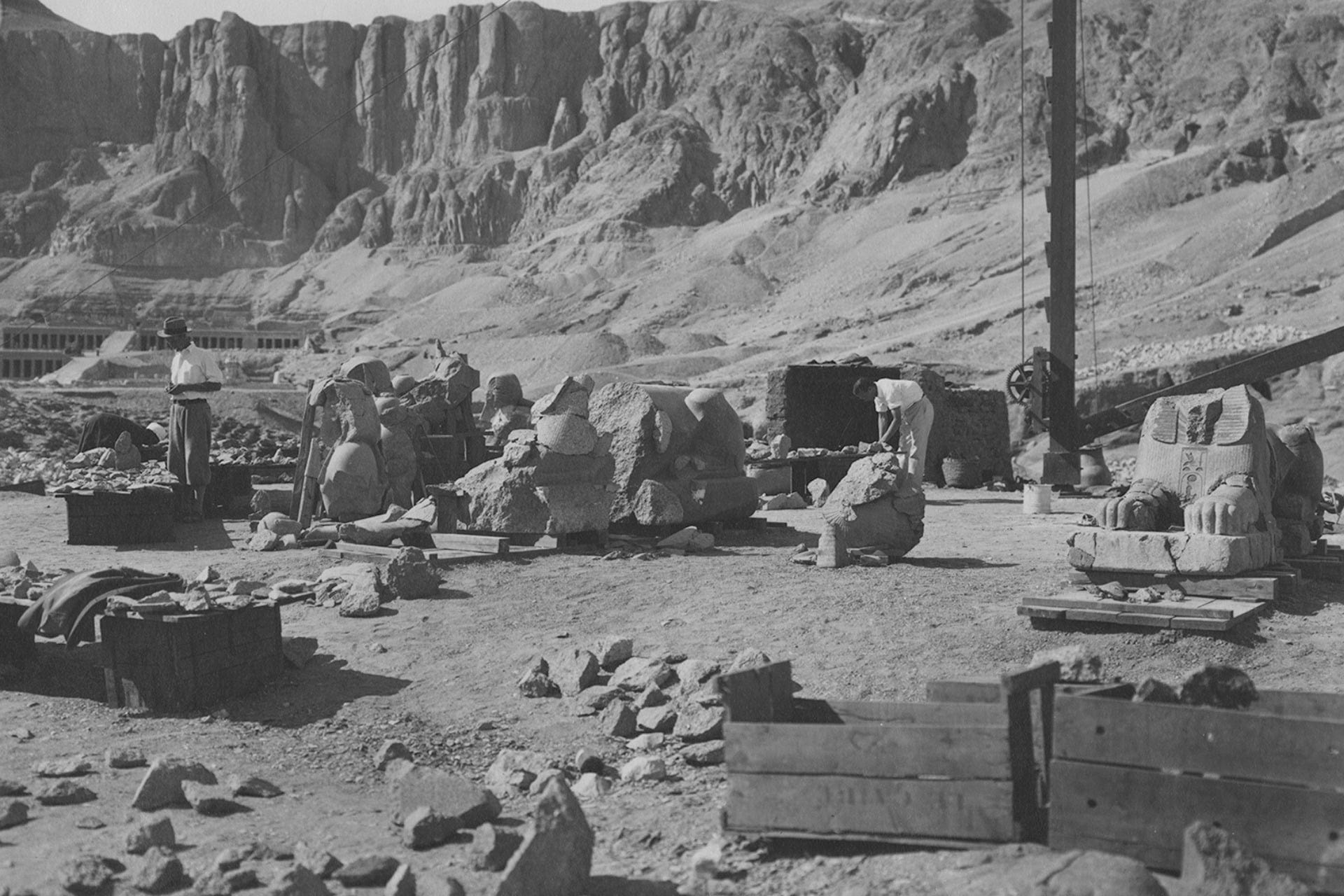
Perhaps it should come as no surprise that this time around Hatshepsut has cannonballed into our news cycle as a female king who was hardly erased by her nephew, at least not with malice, as a female king who was wronged by no one, as a female king whose oversize reputation was cut down to size by necessary temple clearance and the natural movements of time. From where does this Hatshepsut reboot come?
It all started with an article by NY Times archaeology writer Franz Lidz about new research on Hatshepsut published in the journal Antiquity in 2025 by Toronto PhD candidate Jun Wong. Wong has done deep analysis of Hatshepsut’s statues for his dissertation at the University of Toronto, determining that they were all systematically unalived—cut at the neck, waist, and feet—some reused in other buildings, some thrown into a series of pits. Wong concludes that Hatshepsut’s nephew didn’t destroy her memory as much as benignly neglect her. His work catapulted Hatshepsut’s reign back into the pages of the New York Times and on to the air waves of Public Radio International—for our perusal and judgement, reflecting our own conflicting and complicit understandings of women as powerbrokers and caregivers of society.
Wong’s careful and systematic work was able to prove that almost all of Hatshepsut’s statues were carefully decommissioned by Hatshepsut’s nephew, some a few years after her death, some after more time had passed. For me, this confirms that Thutmose III wanted and needed to ideologically remove his aunt and erstwhile co-king from her perch of power, even in death. He wanted to do this because a woman’s rule sullied the reputation of his own rule, yes, but probably also so that he could bypass her genetic line and focus on the younger son who would be king after him, whom Egyptologists call Amenhotep II. But that’s not what Wong extrapolated from his research. Wong’s abstract from Antiquity tells us we should look to the practical, not the political reasons for Hatshepsut’s removal:
The statuary of Hatshepsut, who ruled Egypt during the Eighteenth Dynasty, is believed to have been targeted for violent destruction by Thutmose III, her successor. Yet the condition of the statues recovered in the vicinity of Hatshepsut’s mortuary temple at Deir el-Bahri varies considerably and many survive with their faces virtually intact. Through the examination of archival material from the original excavations, the author offers an alternative, more utilitarian, explanation of the treatment of these statues. Rather than outright hostility, much of the damage may instead derive from the ‘deactivation’ of the statues and their reuse as raw material.
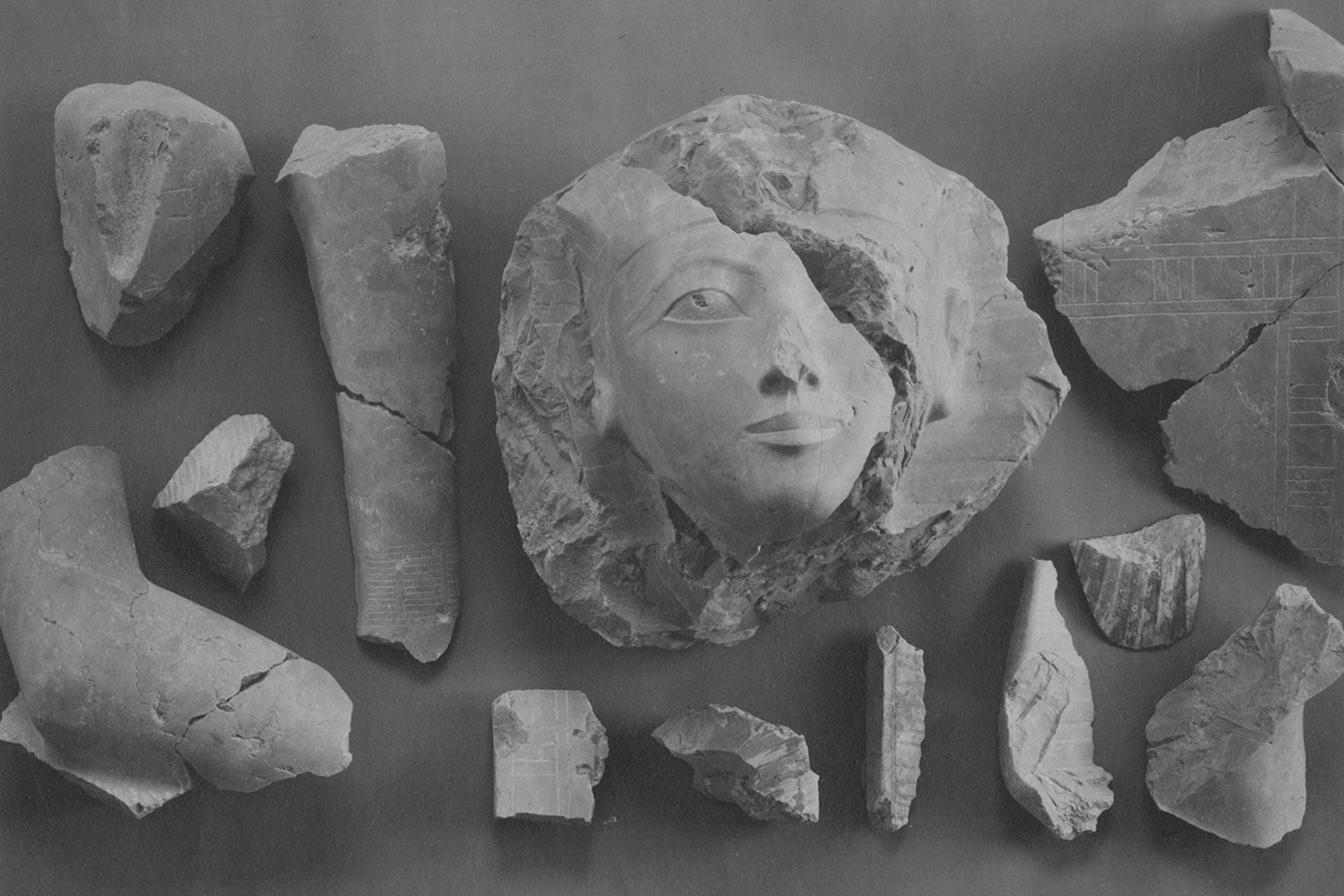
The intact nature of Hatshepsut’s statue faces is essential to Wong’s argument because he thinks the lack of face-hacking means Thutmose III did not try to harm her memory after her death. Because so many of Hatshepsut’s statue faces were not smashed outright, Wong recognizes an unemotional and clinical reuse of her statues, rather than a political destruction of her legacy. It also allows Wong to deny any distasteful emotions like hate or anger from Thutmose III against his aunt Hatshepsut. He argues:
Indeed, Hatshepsut’s damaged visage is so striking that it is easier to associate it with a deliberate attack, rather than mundane processes such as reuse or decay.
Wong sees an apolitical repurposing of her materials at worst, or the disintegration of her objects over the millennia, at best.
Wong’s argument uses materiality to source human emotions—to read emotionality into the destruction of Hatshepsut’s statuary and, ultimately, into the relationship between Hatshepsut and Thutmose III. But I would argue that certain emotions—like familial love, hate, or indifference—were not a part of the Egyptian monumental temple record at all, as opposed to the accepted and depicted forms of divine love explicit in the embrace between a king and god carved onto a temple wall or the righteous hate of one’s enemies as shown in the gargantuan smiting scenes that fronted temple pylons.
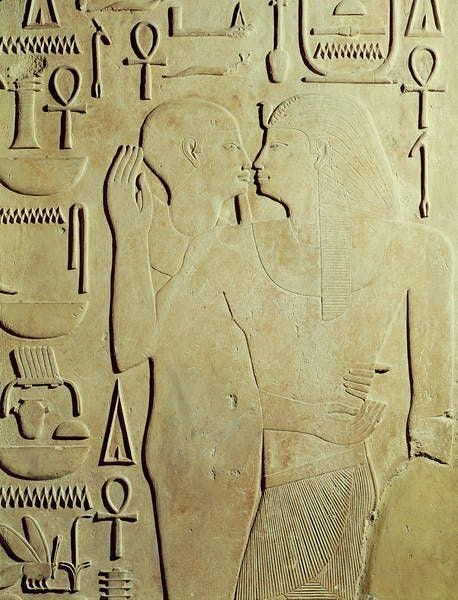
It was almost certain that neither Thutmose III nor Hatshepsut felt the freedom to exhibit any such wild human emotions—not in stone statue creation or destruction, not at court, and perhaps not even in their private dealings with one another—because royal people were and are not allowed such human frailties as figures representative of the state.
If a king like Thutmose III showed wild emotion, it was rage at his west Asian neighbors, which he unleashed with tact and precision in the battle of Megiddo fought immediately after his aunt Hatshepsut’s death and recorded in his annals at Karnak temple. Nowhere do we read of any emotionality between the two co-kings. Shattered statue faces or not, we simply cannot know how Hatshepsut and Thutmose III regarded one another personally, how they spoke to one another, or how the nephew remembered his aunt after the elder woman’s death.
But Wong’s argument about emotionality translates into political expression, and his refusal to see that emotionality implies a refusal to admit that Hatshepsut’s destruction had anything to do with factions at all. For Wong, the destruction of her images was purely pragmatic, just a base removal of what was no longer needed in a given ritual space order to reuse the atea and the stone.
And yet we can clearly see Hatshepsut’s take-down in the archaeological record, the blocking up of certain temple areas as unusable and unseeable, and it was, as Wong admits, a massive campaign of destruction undertaken at great cost to the young solo monarch Thutmose III. In a few cases, colossal statues of Hatshepsut were renamed by Thutmose III just a few years after the female king’s entombment, an easy and quick claim of monumental kingship.2 In most other cases, however, the young king waited, biding his time, until 20 to 25 years had passed to destroy and dismantle the many hundreds of life-size statues and reliefs of his mistress.3 French archaeologists have proven the moments of Thutmose III’s most concerted destruction using architectural analysis and building stratigraphy at the temple of Karnak. That timing doesn’t necessarily mean such destruction happened at the exact same time at Deir el Bahari (or Memphis or Heliopolis or Assiut), but it does provide some understanding that Thutmose III waited for the more destructive aspects of his aunt’s removal from Egypt’s temples.
As Wong notes, the uraeus cobra on Hatshepsut’s head was always struck, whether it was carved in two- or three-dimensional form. This hooded viper was a key target, because it was this element that transformed her into a sovereign. Given this, I wonder whether Thutmose III’s craftsmen were ordered to strike Hatshepsut's face at all, when it was the uraeus that mattered. Indeed, Thutmose III only destroyed images of Hatshepsut as king, not attacking any scenes of her in queenly support of her husband. He didn’t harm her names, leaving those unscathed. Like every historical fact, various human agendas conflict with one another. Perhaps we have a young king who didn’t want to hurt his aunt’s person but needed all memory of her kingship erased.
Wong seems to take issue with words like “brutal” or “smashed” in reference to Hatshepsut’s statuary, because to him that is not what he identifies in the archaeological record. He notes no thorough and comprehensive smashing of faces, and thus only identifies a cold precision of deactivation—which to Wong somehow means that Thutmose III had no political issues with or emotional enmity against his aunt. I suppose a woman has to get hit in the face—hard—to prove the abuse the patriarchy has dealt her…
It’s important to ask what kind of labor such destruction actually demanded from Thutmose III’s workers. He asked his artisans to drag dozens—not one or two, but around 40—hard stone statues weighing multiple tons from Hatshepsut’s temple of millions of years, to be decommissioned and buried nearby. And this was just one of many temples created by the female king. Hard stone statues are not easily broken into pieces, not now and not then. Indeed, we still don’t even know how hard stone statues were cut by the ancient Egyptians because bronze tools cannot make a dent in red granite or granodiorite. The Egyptians had to use hard stone to cut hard stone. (The best explanations I have read recently are in Kristen Thompsen and Marsha Hill’s recent volumes on statuary from Amarna, so check those out).4 Thutmose III took on the laborious task of ordering dozens of hard stone statues systematically broken, as Wong proves, at the neck, waist, and feet, demanding great energy, time and skill in destruction.
Thutmose III also asked his craftsmen to remove dozens of colossal limestone statues of Hatshepsut as an Osirian king fronting the columns of her temple of millions of years at Deir el Bahari. He ordered his chisel bearers to go into all of Egypt’s state temples and remove this female king with a light scatter of chisel strikes that allowed reworking of the scenes, saving the relief and the temple walls for future use. Sometimes Hatshepsut’s figure was recarved into a strangely tall altar full of food offerings for the gods. Other times her image was reworked into that of her dead father Thutmose I or dead husband Thutmose II. Much of that reworking was done in plaster relief work, most of which has since fallen away, showing only the faint ghosts of Hatshepsut formed by a spray of chisel strokes into the stone that erased her once crisply cut and painted form.
Wong would have you believe that these modifications were done without politics in mind, that this was a kind of benign reuse and cheerful neglect thereafter, all because the craftsmen didn’t strike at her statuary faces. Such a view of benign reuse rescues Hatshepsut’s kingship from charges of greedy usurpation and baptizes Thutmose III’s benevolent treatment of his co-king’s memory in one stroke: Nothing to see here! There was nothing emotional or human or political meant by Hatshepsut’s removal, we are told, just the antiseptic cleansing of spaces that no longer needed her imagery. Such an interpretation implies justice and goodness in the actions of Thutmose III’s removal and that this woman—perhaps too full of emotions herself, the argument intimates—had it coming. This is also, of course, a comforting narrative in a world of angry feminists opting out of patriarchal structures like marriage and multiple childbirths and religious obedience.
But if these removals of relief and statuary represented apolitical reuse, then why didn’t Thutmose III recarve her many expensive and hard-won statues for himself? His portrait was very similar to Hatshepsut’s, after all. Most of Hatshepsut’s statuary depicted her as a man, not a woman, and the strong, masculine body shape in service to the gods would have suited the young king. Recarving would have been relatively easy, much easier than ritual cutting at the neck, the waist, and feet. But that’s not what Thutmose III ordered. He opted for the hard, laborious, painstaking work that likely took years, instead of moments. And he did it because he didn’t just want Hatshepsut out of sight; he needed her politically and ideologically purged.
Wong’s timing arguments are interesting. He argues that the erasures and dismantling started earlier and/or continued later than archaeologists thought. This is building on the work done by archaeologists at Karnak who have used architectural stratigraphy to demonstrate that colossal statuary of Hatshepsut at Karnak was renamed in the second year of Thutmose III’s sole reign. As for other architectural reasoning for the erasure later in the reign of Thutmose III and early Amenhotep II, that also comes from Karnak Temple on the east bank. Wong’s analysis of Hatshepsut’s statuary from Luxor’s west bank seems to show a different story in terms of timing dismantling and destruction. This is very interesting and could be used to complicate the story of Hatshepsut’s removal. But for Wong this timing differential somehow implies that Hatshepsut’s statues were not deconstructed for personal or political reasons.
Wong’s careful analysis reveals that some of Hatshepsut’s statues ended up being highly fragmented, while others were left untouched, that some were reused architecturally, others not, that some freestanding statues were buried virtually complete, while others were destroyed more completely. The problem lies not in Wong’s systematic evaluations, but in his conclusions and extrapolations about what he sees as the half-baked destruction of Hatshepsut. To him, the lack of total brutality disproves any overt political takedown of the female king and instead points to a benign removal and dismantling of her memory.
But think about these destructive actions a moment again: Each statue had to be dragged from its emplacement at great cost of labor and time. We’re talking dozens of freestanding statues, hundreds of architectural statues including the Osirian columnar statues and sphinxes at Deir el Bahari alone. It can’t have been easy to move them about in a temple space arguably constructed around them. Thutmose III needed massive work crews who could move heavy, unwieldy pieces with precision. The statues were dragged out of their temples—whether at Deir el Bahari or at Heliopolis or elsewhere—through narrow doorways and gateways, down hallways and ramps, until they could be brought to a place where they were they had their uraeus smashed, were broken across the feet, waist, and neck. Some were dragged to the quarry at Deir el Bahari, and if Wong is correct, many of these statues were then dragged to the so-called Hatshepsut Hole. Wong admits the extravagant expenditure of men and money to damage Hatshepsut’s statements of power, but he does not recognize how this focus on destruction pulled resources from Thutmose III’s creation of his own monuments of power and this was a necessary political show.
Reuse is an issue in his argument too. Anytime a statue of Hatshepsut was reused in a new building within the ramps and walls Wong sees such action as indicative of Thutmose III’s apolitical actions. He’s only reusing, not destroying, Wong is saying. But reuse is not mutually exclusive to destruction, or to politics. Human beings are always pragmatic; resources are always finite. To reuse the stones of a sacred space as temple fill or foundation can still be an activist statement.
Because Hatshepsut’s statues were not crushed into dust, Wong perceives the actions as easily done and neutral in their intent. But I would argue that outright, thorough and complete damage is rare among humans. It’s simply too demanding. A few slaps around the face, some open abuse of the statuary, and you’ve made your point. Anything else is much too expensive. Thutmose III likely did not want to put all his resources into the complete and total ruination of his aunt’s memory because he needed to build for his own. Even the Islamic State’s destruction of Assyrian palace reliefs was piecemeal, destroying some for the cameras and selling most on the antiquities market to raise money for arms sales.5
Wong doesn’t find any evidence that Hatshepsut’s statues were ever crushed to bits. But this seems an argument from silence. How can he say that if some statues are missing half or more of their structure? There are statues in the Metropolitan Museum of Art that show half the statue just gone, implying the fragments found by archaeologists were too small to be pieced together.6 That means significant portions of some statues were indeed crushed to tiny bits. I’m not saying Hatshepsut’s statues were ground into dust. I don’t think anyone has argued for this. Such expensive and extensive labor wouldn’t have been expedient for anyone, let alone Thutmose III who wanted to get started with the stagecraft for his own solo reign. But the fact remains: during the reign of Thutmose III craftsmen went to great lengths to remove Hatshepsut as king from public temple spaces and deactivate her images. Destruction like this is laborious! Cutting the neck and waist and feet of every freestanding piece as exhausting! However he felt about her, and we will never know, Thutmose III needed King Hatshepsut not just gone from his elite people’s view but cut down in their sight before her removal.
Wong argues against the succession argument—that destruction of Hatshepsut’s images was part of a larger campaign paving the path for an alternative and younger son, namely Amenhotep II, not of Hatshepsut’s direct lineage—saying that Hatshepsut’s daughter Nefrure had predeceased Hatshepsut and thus she could not have be a part of any succession plans. Nefrure may or may not have predeceased Hatshepsut, but that doesn’t necessarily matter. Nefrure’s male offspring were what mattered for succession. Nefrure’s images as Great Royal Wife were certainly erased from the third terrace of Deir el Bahari, among many other places, probably before Hatshepsut died, and so completely that we can hardly talk about Nefrure’s role alongside Thutmose III at all.7 Nefrure and Hatshepsut were both important enough to erase and quite thoroughly. Why? Just because? No because they were the powerbrokers and kingmakers. The dynasty passed through their bodies when they took on royal husbands and birthed royal babies. If an alternative succession plan bypassed Hatshepsut’s lineage, it would be expedient to remove any image of her from Egypt’s religious spaces. And those of her daughter too.
As for Wong’s argument that the destruction of Hatshepsut’s statuary was not violent and mindless, but strategic and careful, I would say that the destruction of statues or churches or Jim Crow created Civil War memorials or communist colossal statues or whatever other monument of power is not always mindless and violent. It is whatever the winners want to present to their elite public. When the Spanish took Templo Mayor in Mexico City they only partially destroyed the ritual place and then built their cathedral on top of it, using the mound and space to claim ideological power. The point was made, and archaeologists are still able to make astounding discoveries of the Aztec architecture in this space. William Tecumseh Sherman’s march to the sea in the American south, on the other hand, was purposefully brutal, wantonly burning plantation homes and cities, butchering livestock and burning orchards, purposefully done to break the will of the southern people. Destruction is as destruction demands. We can imagine Thutmose III did not want to betray any feelings of personal vengeance against his aunt, and Hatshepsut’s removal was thus not an excessive and violenct conflagration of complete destruction. But she was removed nonetheless.
Destruction is usually well conceived, clever, and politically minded. It has a purpose. And that’s precisely because destruction is so costly. Destruction probably happened in fits and starts, likely as it suited an audience gathered for the occasion. Destruction is rarely thorough. Destruction demanded skill and labor from stone workers more accustomed to creating. Again, it would have been quite easy for Thutmose III to simply recut many of Hatshepsut’s statues for himself, as Ramses II did with so many Amenhotep III statues. But Thutmose III did not do this, at least not for the life-sized pieces. He instead deactivated and buried all of his aunt’s statues and at great expense. So we can’t argue that the Egyptians just reused these pieces and that pragmatism was the primary motivation. Read differently, the evidence shows Thutmose III didn’t believe he could reuse Hatshepsut’s statuary, for whatever reason, and that he had more to gain from the costly work of destruction. He had to chop them up and throw them away. Whether we call that “deactivation” or “brutal destruction” or “reuse” because it ended up used as fill somewhere else is where the arguments diverge because each scenario implies intent.
Wong sees disinterested reuse, while I see a destruction that was much deeper than innocent clearance. Other evidence—like the systematic constraint of the powerful God’s Wife of Amen priestess upon which Hatshepsut had relied after her reign—point to the court’s distrust of royal women and purposeful exclusion of them from institutional power. It would not be until the late 18th Dynasty and the queenships of Tiye and Nefertiti that women were able to build real factional power at court again.
I’m quite happy to read and learn about Wong’s more precise definition of statue deactivation. I find this work a real contribution to the field. The field needs archival research in combination with art historical analysis of statue fragments. It will add to the discourse immeasurably. But Wong’s conclusions about Thutmose III’s intent are not only incorrect, but a reflection of Egyptological discourse that erases any harm done to ancient women, whether they be mighty queens or harem wives of the king.
In the end, we come to the political point of Wong’s apolitical interpretation: it has now become fashionable for Egyptologists to view complicated gender factionalism at Egypt’s court through a neutral, unemotional, “scientific” lens, removing all the messy real-world, human actions of powerful men and women within patriarchal systems. Arguing that Hatshepsut and Nefrure were removed in an innocuous moment of clearance imposes a disinterested agency that denies any personal conflict or any political strategy on the part of Thutmose III, not to mention any change of that strategy through time (he had a long reign!). Such an argument also denies that there was factional pushback against female leaders during and after the reign of Hatshepsut.
It’s an interesting argument to claim that Thutmose III was never angry at his aunt. It’s as if she wasn’t worth his anger. And this is exactly what patriarchy does to women who reach too far, who climb too high. The discount them; they belittle them. It was the woman who got overly emotional, not the man; she is the one with the anger management problem. She’s out of control. Patriarchal society demands a woman subsume her rage or be removed. She must show empathy and care no matter what; she must prioritize the patriarch. And she is still considered over-emotional, hormonal, dangerous even, someone who cannot see the landscape of the problem with a clear and unjaundiced eye. Why? Perhaps because the sons are made by her, through her, and she is naturally full of bias on behalf of her offspring. Perhaps because she cares too much.
In the end, don’t let anyone tell you that the removal and destruction of a queen’s statues isn’t political, isn’t personal. Don’t believe it. Don’t be gaslit. Cutting statues at the neck and waist and feet is not sober reuse; it is systematic destruction of a woman’s political body of work with partisan intent.
And for another take on Hatshepsut’s story, see this story by Public Radio International’s The World: “The unmaking of a hugely successful female pharaoh”
Cooney, Kara, 2014. The Woman Who Would Be King. New York: Crown.
Cooney, Kara, 2014. The Woman Who Would Be King. New York: Crown, 197.
This later date for the destruction of Hatshepsut’s monuments was first established by C. F. Nims, “The Date of the Dishonoring ofHatshepsut,” Zeitschrift für Ägyptische Sprache und Altertumskunde 93 (1966): 97-100. Also see Blyth, E., 2006. Karnak: evolution of a temple. Routledge, 51-52, and Dorman, P.F., 2013. The monuments of Senenmut: problems in historical methodology. Routledge.
Kristen Thompson and Marsha Hill. 2024. Statuary from Royal Buildings at Amara: It’s Creation and Contexts. London: Egypt Exploration Society, chapter 2.
Shahab, S. and Isakhan, B., 2018. The ritualization of heritage destruction under the Islamic State. Journal of Social Archaeology, 18(2), 212-233.
Restoration makes this hard to see on the indurated limestone statue of Hatshepsut, but a close look reveals massive chunks of the statue are missing, including half the face. https://www.metmuseum.org/art/collection/search/544450
Z. Szafranski, “Imiut in the ‘Chapel of Parents’ in the Temple of Hatshepsut at Deir el-Bahari,” in 8. Agyptologische Tempeltagung: Inter-connections Between Temples, ed. Monika Dolinska and Horst Beinlich, Konigtum, Staat und Gesellschaft friiher Hochkulturen 3 (Wiesbaden: Harrassowitz, 2010).
Wow @Ante you’re all over the place with your whataboutism.
1. Clearly you haven’t listened to Afterlives of Ancient Egypt or read much of Kara’s writings if you think she only cares about the elites+
2. You cannot divorce Hatshepsut from her gender for argument’s sake! Will we ever know for sure that her image, her titles, etc. were removed simply because she was a woman who dared to be a king? Of course not. But it doesn’t change the fact that she was a female king co-ruling with a male king and that this was quite rare in Egyptian history. Ignoring that fact is akin to erasing her yet again.
Jeesh. Read again. I fail to see where Kara argued that matriarchal societies were peaceful utopias with rainbows and unicorns. What are you even talking about?
Know what is also interesting? The workers' graves st Amarna. Unlike the elite workers who had built the Pyramids at Giza, these were some of the sickest, most broken people in all of Egypt's history. Extremely extractive towards own population. But this is unimportant to you, because Nefertiti, Meritaten, Matriarchy Good! Who cares about those workers, they were not actual people and serves them right for being Patriarchal...!
Excuse me, but that is just silly.
Far as what matriarchy really looked like: the Neolithic people of Catalhöyük were matrilocal and probably matriarchal. Some 25% of remains show healed skull fractures
Sure looks like that Matriarchy thingy was just as violent as the Patriarchy thingy.
Celts were also matrilocal. They also seem to show traces of matriarchy, although this got flipped at some point in history. But traces remained. The way Celts showed submission to a chieftain was by sucking on his breast nipples. Makes zero partiarchal sense, but seems to be the nastiest thing a woman could envision doing to another woman she hated. Celts also practiced human sacrifice. So where did all that peaceful Matriarchy go?
Was never that peaceful in the first place.
Also, turns out even deepest Patriarchy regularly made use of matriarchal-type violence: in a lot of "primitive" tribes, killing of captives was considered women's work. But they were all nice, gentle and matriarchal when doing it, those captives barely felt they were even being slaughtered and peacefully fell asleep, unilke what would have happened had they been slaughtered by toxic men instead... /s
Patriarchy and Matriarchy are both restrictive bullshit by definition; only complementarity makes a lick of sense there. And pardon my French, you seem to be the best proof there is for that.